Durable Human (2 book series)

Nuts and Bolts of Bike Share

Bike share programs are springing up all over the world.  For an idea of how they work, a system in the bustling, northern Italian city of Milan provides a good example.

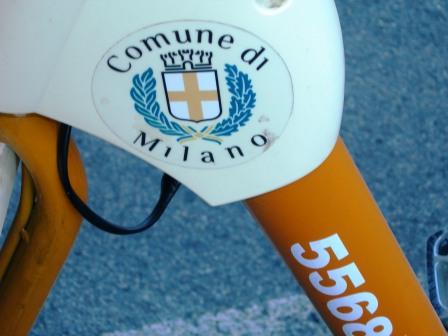
A Milano rent-a-bike

You know when it’s a rent-a-bike

There’s no confusing a colorful bike share bike, which is clearly marked with municipality and conspicuous I.D. number (an effective theft-deterrent).   Continue reading

Disney’s Active New Attraction

Tess and the Kimmunicator

Tess and the Kimmunicator

The humble flip phone may revolutionize the way we experience theme parks. It’s all happening at Disney World’s Epcot, courtesy of a girl named Kim.

The Kim Possible World Showcase Adventure simply gives guests something that they want. People want to be active, physically and mentally,” Jonathan Ackley – who directs Walt Disney Imagineering’s Interactive Division – told The Durable Human.

My 8-year-old cousin, Tess – like many girls of a certain age – loves Kim Possible.  Kim stars in her own Disney Channel animated series as a high school cheerleader who turns secret agent. On our recent trip to Disney World, Tess heard on the bus from the airport that there was Something Kim at Epcot and I knew I wouldn’t hear the end of it until we found her. Continue reading

How Green is My Classroom

At this point in the new century, many of us do things to save dwindling resources and make better use of others. But decisions can be tricky. Where do we set the thermostat and still be comfortable? Should we eat the organic imported orange or the conventional local apple? Do we print out the PDF or read it online? Technology helps, but can complicate matters.

Large institutions have a harder time because they must meet disparate needs and demands. Take the example of American University, a school in Washington, D.C., which recently introduced a Green Teaching Certificate. Courses are “Green Certified” if teachers communicate online, use electronic books and readings, and let students use laptops in class, among other measures considered sustainable.

But the system is causing hiccups for the age-old craft of writing. Writing instructors and their first-year students were surveyed for a Literature Department teaching seminar aptly named “Going Green in the Classroom: Balancing Ecological and Learning Environments.”

It turns out that faculty members all do some things green, even if not officially certified. There is general agreement that posting assignments on the document-sharing platform, Blackboard, helps everyone stay organized. But working online apparently has its drawbacks.     Continue reading

What’s Wrong with Rita (and Right with Wikipedia and Meetup)

I was walking with my friend when she told me her dog, Rita, was having a terrible time with allergies.  Nothing—from pricey prescription dog food to medicated soap—made any difference. As she was talking, I thought of a Green Living Meetup I had just attended, the topic:  “Ways of Reducing Chemicals in Your Home”.  Something I learned there just might help.

I had never been to a Meetup before.  When I arrived a little early on that rainy Saturday afternoon, the room in the public library was already half full of a diverse assortment of adults, plus a few babies.  Our smiling hosts, Sara and Todd, sat on a table up front next to an array of boxes, bottles and bags.

Sara spoke first, explaining how the human body fights off infection and rids itself of harmful chemicals. Toxins are carried off in secretions such as sweat and mucus, or filtered by the kidneys, liver and other organs.  Allergies and chemical sensitivity happen, she claimed, when those mechanisms are overwhelmed.  The wafts from a fresh coat of paint or new printer could be the last straw to break the back of the body’s natural defenses.

Promising he’d have good news later, Todd launched into a litany of scary environmental data.  A long-range study by the EPA detected 900 chemicals in the air of the average government office building.  Indoor air can be ten times more polluted than the air outdoors.  Houses, especially new ones, can harbor a host of noxious compounds.  Throat-cancer-causing formaldehyde, for instance, may hide in your shampoo, your tissues, your carpet, and the no-iron clothes you wear. Continue reading

JOIN US

Sign up to receive Durable Human News

FREE DURABLE TIPS CARD

Receive a printable list of 7 durability-building habits for adults and kids

    © 2021 Austral Arc LLC Design by MonkeyPAWcreative.com.
    Some books and other products recommended on this site may be linked to the Amazon Affiliates Program. See Amazon Privacy notice.